legal · South Africa
Invite to Online Side Event: 65th Commission on Narcotic Drugs, United Nations International Centre, Vienna
🌿 Plant Truth Index
Stigma Breaker
Reform partner publication
90+ Stigma Breaker · 70+ Plant Forward · 40+ Factual Record · below 40 Prohibition Echo
Cause and Effect – Making the Case for Evidence-Based Drug Policy Side Event: 65th Commission on Narcotic Drugs, United Nations International Centre, Vienna Wednesday 16 March 08h00 to 08h50 via Zoom Presented by Fields of Green for ALL, Non-Profit Company based in Johannesburg, South Africa. Fields of Green for ALL is the only NGO with ECOSOC status at the UN dedicated to Cannabis law reform.
Cause and Effect – Making the Case for Evidence-Based Drug Policy
Side Event: 65th Commission on Narcotic Drugs, United Nations International Centre, Vienna
Wednesday 16 March 08h00 to 08h50 via Zoom
Presented by Fields of Green for ALL, Non-Profit Company based in Johannesburg, South Africa. Fields of Green for ALL is the only NGO with ECOSOC status at the UN dedicated to Cannabis law reform.
AND
Veterans Action Council, a group of individual military veterans working on a variety of issues concerning the well-being of veterans. The only entity of its kind in the Cannabis space in the United States of America.
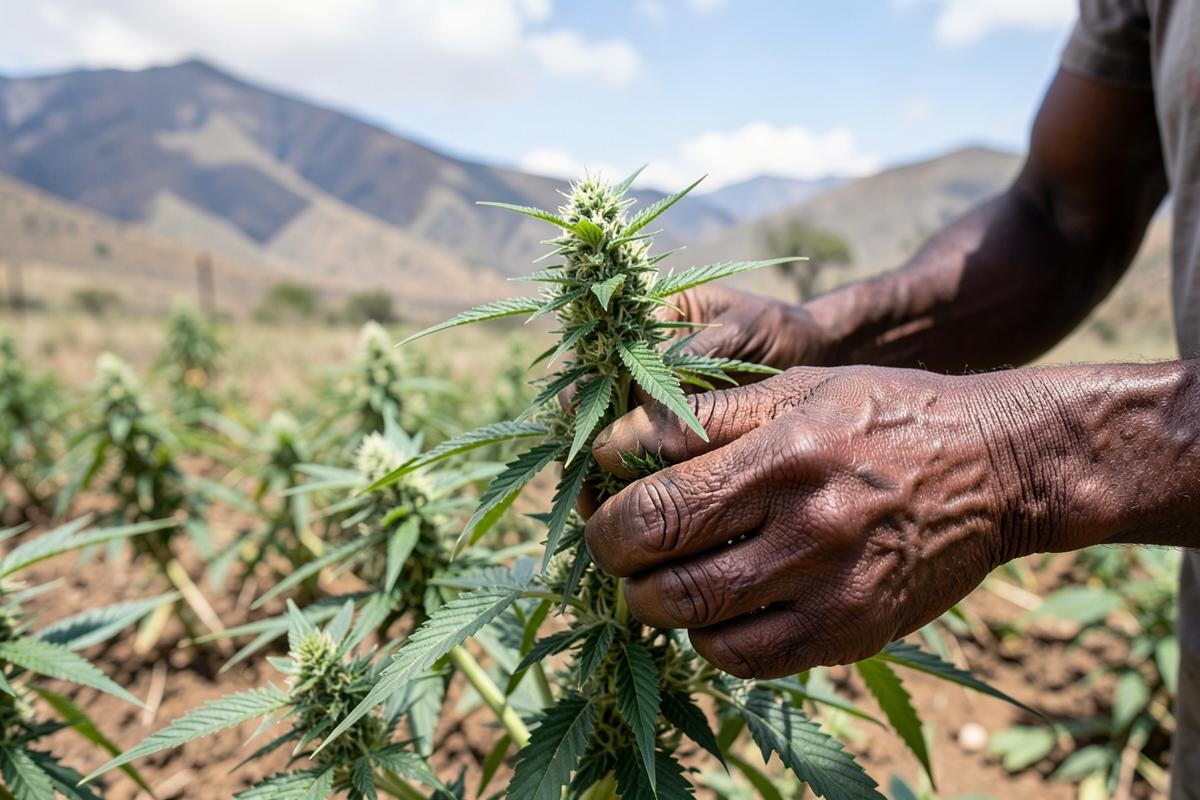
Cannabis prohibition is alive and well, particularly in the global south, where traditional use, cultivation and trade in the plant is endemic and part of rich cultural and religious traditions dating back centuries.
The medicinal Cannabis sector is currently dominated by large corporations under treaty driven regulatory systems that have proved to be onerous and exclusive, effectively marginalizing and criminalizing the traditional Cannabis sector. This is largely due to a treaty system that previously scheduled Cannabis into its most dangerous drugs category, without ever subjecting it to an ECDD review. Because of this absence of evidence, the drug control treaty system finds itself dangerously out of step.
Since the positive CND vote in 2020 removing Cannabis from schedule 4, many countries have begun reform. The WHO ECDD / UN process of recommendations in treaty control offers the most direct way to update the treaty’s evidence base and, while it has limitations in how much treaty reform it can generate, it certainly helps the treaty become better fit for purpose.
This side event aims to review and explore the WHO-ECDD/UN scheduling process based upon three recent examples; Cannabis down-scheduled under the Single convention in 2020;
Kratom, which the WHO-ECDD declined to review and therefore resulted in no recommendation to add Kratom into control at this time in 2021;
And the story of Coca, another pillar of the convention that has never been subject to a proper evidentiary review.
Our speakers, in addition to being official observers of the ECDD process, will have first hand knowledge of these affected communities and will guide attendees through the important role these medicinal plant substances play in people’s lives as part of indigenous ritual, culture and practice as well as the promising sustainable industry emerging around their production.
Speakers
Myrtle Clarke, Managing Director at Fields of Green for ALL (Moderator)
Professor David Nutt, Professor of Neuropsychopharmacology, Imperial College London
Greek Zwene & Ricky Stone – Umzimvubu Farmers Support Network, Mpondoland, South Africa.
Mac Haddow, Senior Fellow on Public Policy, American Kratom Association
Brenda Perez, Executive Director of the Centro del Pueblo, Humboldt County, USA,working with indigenous immigrant communities on Cannabis & Coca issues.
All enquiries: charl@fieldsofgreenforall.org.za
For more reading on previous CND sessions and ongoing work check out these past blogs: Fields of Green for ALL and the CND.
Register for the CND 65 Side Event
16 March. 08h00 to 08h50 (GMT +2) via Zoom and on Youtube
Register your details to be sent the links and join us online.
Your name
Your email Please leave this field empty.
×